








Industrial Belt Selection Guide: Types, Sizes & Applications
Industrial V-belt selection, sizing, and maintenance guides for wrapped, cogged, aramid-reinforced, Poly-V, metric, variable-speed, and double-angle belts. Match the belt profile and length to your sheaves, then shop stocked replacement belts.
Choosing an industrial drive belt starts with the existing drive, not with a guess at length. The belt cross-section must fit the pulley groove; its construction must suit the speed, load and environment; and its length must match the drive geometry. A belt that looks close can ride too high or low in a sheave, slip, overheat or fail early.
This industrial belt selection guide explains the belt families stocked at Madison Tractor, what distinguishes them and what to record before ordering. If you already have a marked belt, start with the V-belt size chart and identification guide. If the belt is worn smooth, use the measurement guide and verify the pulley profile too.
Industrial belt types at a glance
| Belt family | How it works | Typical selection clue |
|---|---|---|
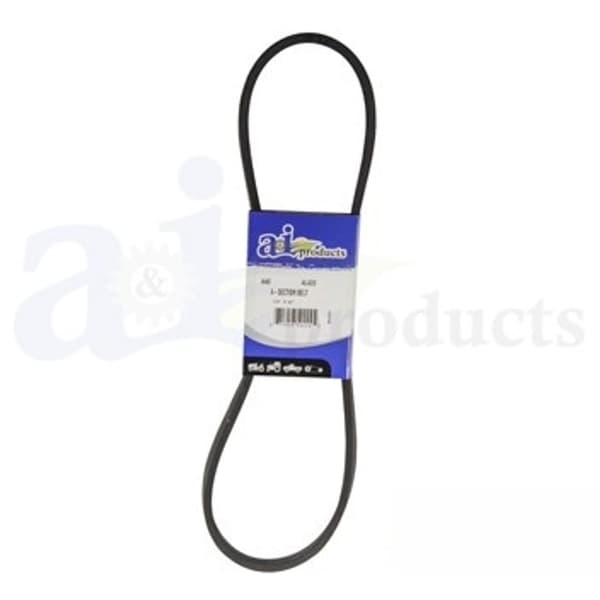
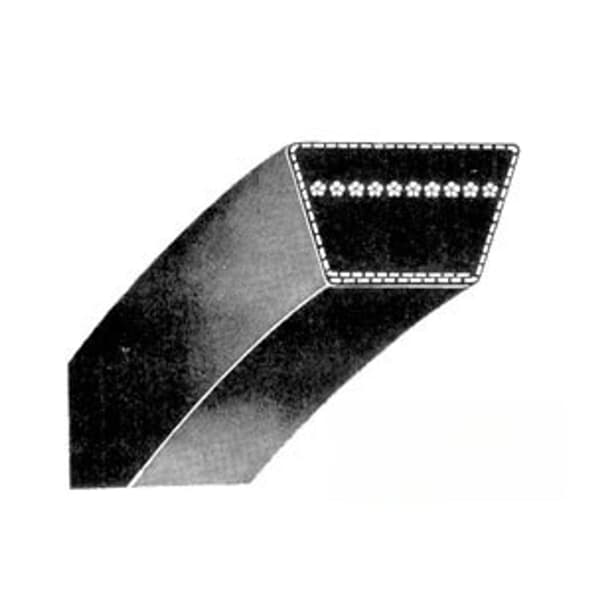
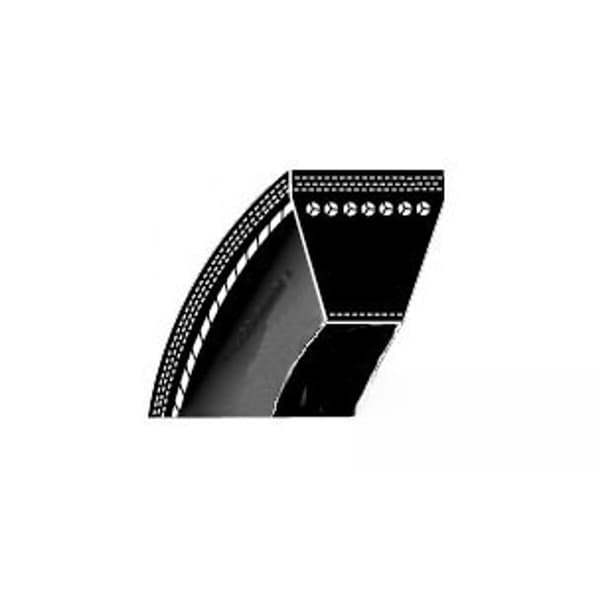
| Wrapped V-belt | Trapezoidal sides wedge into a matching V-groove; a fabric cover protects the belt body. | Standard industrial or equipment drive marked A, B, C, D, 3L, 4L, 5L, 3V, 5V or 8V. |
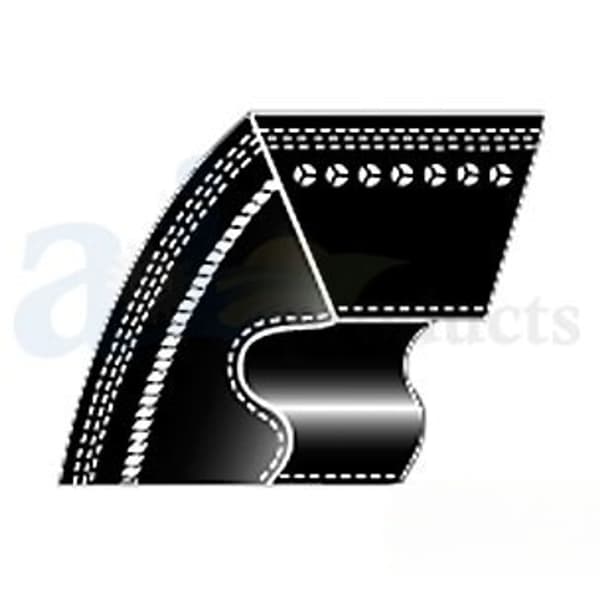
| Cogged V-belt | Molded notches on the inside let the belt bend more readily around a pulley. | Markings such as AX, BX, CX, 3VX or 5VX; the groove still has to match the section. |
| Aramid-reinforced V-belt | Uses aramid tensile cords for a belt construction designed for demanding drives. | Blue aramid/Kevlar-style belt specified by the equipment maker; match its exact section and length. |
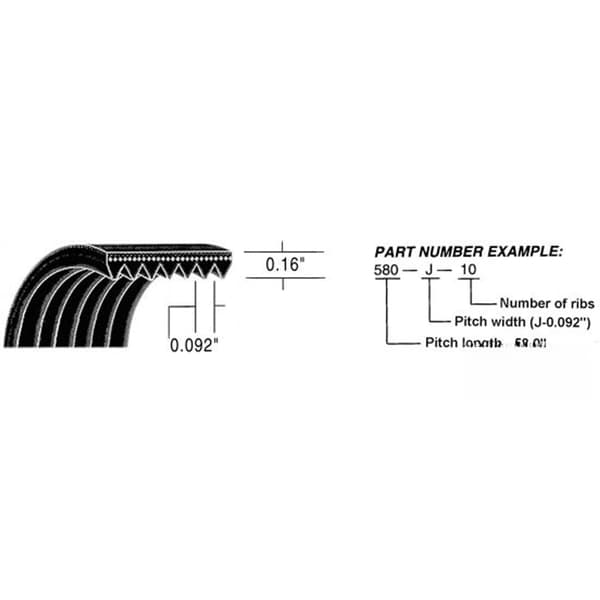
| Poly-V / micro-rib | Many narrow longitudinal ribs share drive contact across a compact pulley. | J- or K-section ribbed marking; count ribs and match the belt length. |
| Metric SP V-belt | Metric wedge profile for a matching metric sheave. | SPA, SPB, SPC or SPZ marking and metric length. |
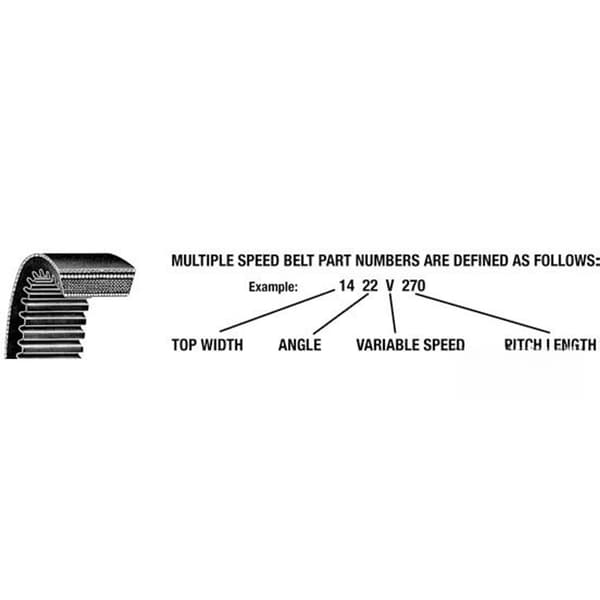
| Variable-speed belt | A wide belt changes its running radius in a variable-pitch sheave. | Special drive belt with a width/profile specified for the variable-speed pulley. |
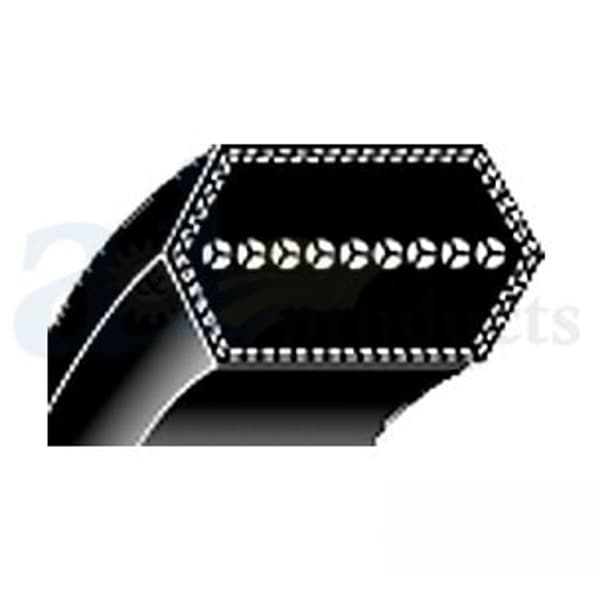
| Double-angle belt | Hexagonal section can transmit power on both angled faces. | AA, BB or CC marking in a drive designed for a double-sided belt. |
How to choose the correct replacement
- Read every marking. Record the section, length code, brand and construction before removing the old belt.
- Identify the sheave. Check the groove profile, number of grooves, rib count and whether the drive contacts one or both sides of the belt.
- Match the construction. Wrapped, cogged, aramid-reinforced, Poly-V, variable-speed and double-angle belts are not interchangeable just because their lengths look similar.
- Confirm length basis. Belt standards may reference inside, outside or datum/effective length. Do not compare measurements from different systems as if they were the same.
- Check the drive. Inspect pulley grooves, alignment, tensioners and bearings. A new belt will not correct a seized bearing or misaligned sheave.
What early belt failure can tell you
Glazing or rubber dust can point to slip, excessive load or poor tension. Edge wear often suggests misalignment or a damaged sheave. Repeated breakage can indicate a jam, incorrect section, excessive tension or a belt routed over the wrong side of an idler. Find the cause before fitting the next belt.
Shop stocked industrial belt profiles
Browse all Industrial Belts, or go directly to wrapped V-belts, cogged V-belts, aramid-reinforced belts, J-section Poly-V belts, metric SP belts, variable-speed belts or double-angle belts.
Recommended Parts for This Guide
7 parts we recommend — in stock, ships fast, one-click add to cart.
Industrial belt FAQs
Can I replace a wrapped V-belt with a cogged belt?
Only when the equipment specification and sheave profile permit that construction. Match the section and length first; a cogged belt is not a universal substitute.
Can I use a metric belt in an inch-series pulley?
No. Match the belt section to the sheave groove standard as well as the length.
In This Guide
Shop Related Parts
Browse All PartsRelated Articles
Industrial V-Belt Size Chart: Identify Sections & Lengths
Identify common V-belt sections and length markings. Compare classical, fractional-horsepower, narrow-wedge, cogged and metric profiles before choosing a replacement.
Read ArticleWrapped vs. Cogged V-Belts: Differences, Uses & Selection
Learn the construction and selection differences between wrapped and cogged V-belts, including AX/BX/CX markings and when a substitution needs drive-spec approval.
Read ArticleAramid-Reinforced V-Belts: When to Choose a Kevlar Belt
Understand aramid-reinforced V-belt construction, how it differs from standard wrapped belts, and how to match a blue Kevlar-style belt to the specified drive.
Read ArticlePoly-V Belt Size Guide: J and K Micro-Rib Profiles
Learn to identify a Poly-V micro-rib belt by J or K profile, rib count and length, and avoid mismatching the pulley grooves.
Read ArticleMetric V-Belt Size Chart: SPA, SPB, SPC & SPZ Profiles
Compare SPZ, SPA, SPB and SPC metric V-belt profiles, understand metric length markings, and shop matching stocked sections.
Read ArticleVariable-Speed Belts: How to Identify and Replace Them
Learn how variable-speed drive belts work, how to identify the correct profile and width, and what to inspect on variable-pitch sheaves.
Read ArticleDouble-V Belts: Hexagonal Profiles, Uses & Sizing
Understand double-V/hexagonal belts, AA and BB sections, two-sided drive routing, inspection and replacement sizing.
Read ArticleHow to Measure an Industrial V-Belt and Match Its Profile
A practical method for measuring a worn or unmarked V-belt: record its profile, measure carefully, and verify the length basis and matching sheave.
Read Article