








Variable-Speed Belts: How to Identify and Replace Them
Learn how variable-speed drive belts work, how to identify the correct profile and width, and what to inspect on variable-pitch sheaves.
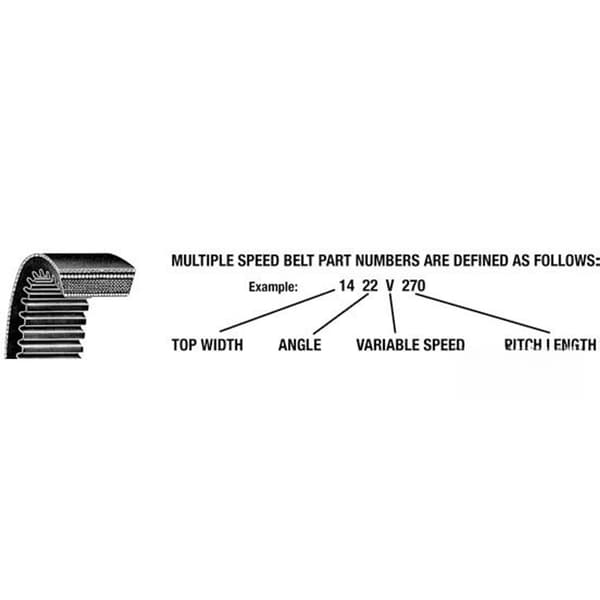
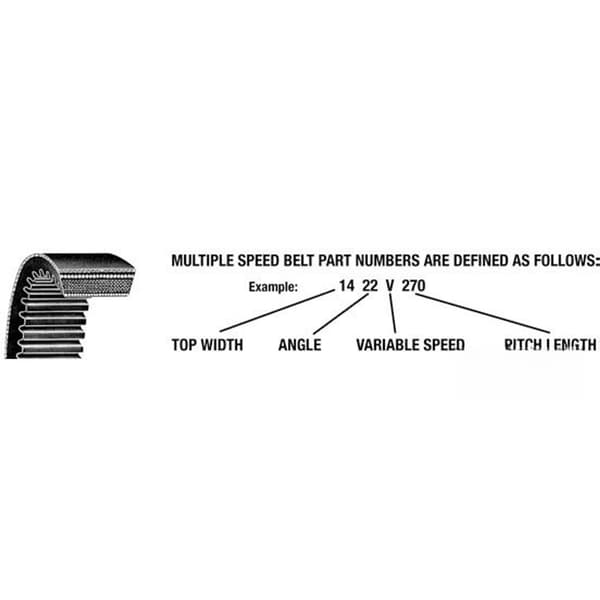
A variable-speed belt works with adjustable or variable-pitch sheaves. As the sheave faces move, the belt rides at a different radius and changes the drive ratio. This belt is not simply a standard V-belt with a different length: its width, side angle and construction are selected for the sheave range and drive design.
How a variable-speed belt drive works
In a variable-pitch pulley, movable sheave faces change the belt’s running radius. The belt must move smoothly while maintaining sidewall contact. A belt that is too narrow, too wide or incorrectly angled can ride at the wrong height, reduce the available speed range or wear rapidly.
Identify the correct replacement
- Record the complete belt number and any width, angle or length markings.
- Inspect the sheave faces and confirm they open and close freely.
- Measure belt width at an unworn point; a worn belt can appear narrower.
- Use the equipment maker’s part number or verified cross-reference whenever available.
- Replace damaged sheaves or correct alignment problems before installing the new belt.
Do not select a variable-speed belt by outside circumference alone. Its profile controls how it rides in the sheaves, and its length designation may use a specified measurement basis.
Common variable-speed belt problems
Glazing, sidewall polish, cords showing, uneven wear or a drive that no longer reaches its expected speed range can point to belt wear or a pulley problem. Check for contamination, incorrect tension, rough bearings, worn sheave faces and restricted pulley movement. A new belt cannot compensate for a sheave that is stuck or damaged.
Shop variable-speed belts
Browse our variable-speed belt selection. Confirm the complete drive specification before substituting a belt.
Recommended Parts for This Guide
2 parts we recommend — in stock, ships fast, one-click add to cart.
Variable-speed belt FAQs
Can a standard V-belt run in a variable-speed pulley?
Only if the drive specification calls for that exact profile. Variable-pitch systems often require a belt designed for the sheave’s full operating range.
Why does the belt sit too low in the pulley?
Possible causes include a worn or incorrect belt, worn sheave faces, or a pulley that is not moving through its designed range. Check the specified belt width and pulley condition.
Part of our comprehensive guide
Industrial Belt Selection Guide: Types, Sizes & Applications