Ford New Holland 971 Combine Parts
971 parts and accessories
The Ford New Holland 971 combine, produced in the late 1970s and early 1980s, was a popular choice for farmers seeking a reliable and efficient grain harvesting solution. Powered by a robust diesel engine delivering around 135 horsepower, it was often paired with headers ranging from 13 to 20 feet wide. Its conventional separator system made it well-suited for harvesting a variety of crops.
The Ford New Holland 971 combine harvester was a staple on farms across North America during its production run from the late 1970s into the early 1980s. Powering this combine was typically a Ford diesel engine, delivering approximately 135 horsepower with a displacement around 363 cubic inches. The 971 employed a conventional threshing system, utilizing a large cylinder, typically around 40 inches wide, to separate grain from the plant material. Grain tank capacity was approximately 135 bushels. The unloading auger could discharge grain at a rate of about 45 bushels per minute. Operators had options for header widths ranging from 13 to 20 feet, accommodating different field sizes and crop conditions. Options for straw choppers and spreaders were also available. The cab offered basic creature comforts for the operator. While effective across various grain crops, the 971 was particularly favored for its performance in wheat and soybeans due to its gentle threshing action and efficient separation capabilities.
Specifications
| Engine | Ford 135 HP 363 cu. in. Diesel |
|---|---|
| Separator Type | Conventional - 40 inch Cylinder |
| Grain Tank | 135 bushels |
| Unloading Rate | 45 bu/min |
| Header Widths | 13-20 ft |
| Fuel Capacity | 68 gallons |
| Weight | 14,500 lbs |
| Years Produced | Late 1970s - Early 1980s |
Maintenance Tips
- Concave Adjustment: Regularly check and adjust the concave clearance based on the crop being harvested to minimize grain loss and damage.
- Belt and Chain Tension: Inspect and maintain proper tension on all belts and chains to ensure efficient power transmission and prevent premature wear.
- Sieve and Chaffer Cleaning: Regularly clean the sieves and chaffer to prevent plugging and maintain optimal grain cleaning performance.
- Bearing Greasing: Grease all bearings according to the manufacturer's recommendations to ensure smooth operation and extend their lifespan.
History & Background
The Ford New Holland 971 combine was introduced in the late 1970s as a successor to earlier models, offering increased capacity and performance. It quickly gained a reputation for its reliability and ease of maintenance. While it didn't feature groundbreaking technological innovations, it represented a solid and dependable workhorse in the combine harvester market.
Frequently Asked Questions
What engine is in the Ford New Holland 971?
The Ford New Holland 971 typically uses a Ford diesel engine, producing approximately 135 horsepower with a displacement around 363 cubic inches.
What is the grain tank capacity on a 971?
The grain tank capacity on a Ford New Holland 971 is approximately 135 bushels, and the unloading rate is around 45 bushels per minute.
What type of separator does the 971 have?
The Ford New Holland 971 features a conventional threshing system with a cylinder approximately 40 inches wide.
What are common parts needed for the 971?
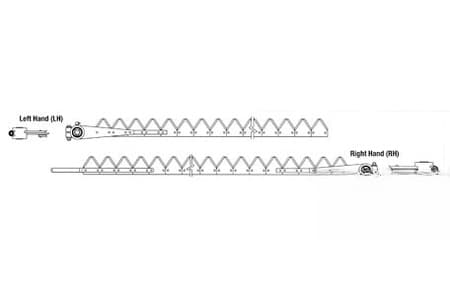
Commonly replaced parts on the Ford New Holland 971 include concaves, rasp bars, belts, chains, bearings, auger fingers, and sickle sections.