Ford New Holland 970 Combine Parts
970 parts and accessories
The Ford New Holland 970 combine, produced in the late 1970s and early 1980s, offered a reliable and efficient grain harvesting solution. Equipped with a range of engine options around 140-170 HP and available with header widths from 13 to 20 feet, the 970 was a versatile machine. Its conventional separator design, known for gentle grain handling, contributed to its popularity among farmers harvesting various crops.
The Ford New Holland 970 combine was a workhorse of the late 1970s and early 1980s, filling a crucial need for medium-sized farms. Production years spanned approximately 1976 to 1982. Engine options varied slightly depending on the year, but most commonly featured a Ford 6.6L (401 CID) inline 6-cylinder diesel engine producing around 140-170 horsepower. These engines were known for their reliability and fuel efficiency. The 970 utilized a conventional threshing system with a cylinder and concave, providing effective grain separation. Grain tank capacity was approximately 135 bushels, with an unloading auger capable of emptying the tank at around 45 bushels per minute. Header widths ranged from 13 to 20 feet, allowing for adaptability to different field sizes and crop types. Chopper and spreader options were available to manage crop residue efficiently. The cab, while not as sophisticated as later models, offered reasonable comfort and visibility. The Ford New Holland 970 excelled in harvesting wheat, soybeans, and corn, making it a popular choice for diverse farming operations.
Specifications
| Engine | Ford 6.6L 140-170 HP Diesel |
|---|---|
| Separator Type | Conventional - Cylinder and Concave |
| Grain Tank | 135 bushels |
| Unloading Rate | 45 bu/min |
| Header Widths | 13-20 ft |
| Fuel Capacity | Unknown gallons |
| Weight | Unknown lbs |
| Years Produced | 1976-1982 (approximate) |
Maintenance Tips
- Concave Adjustment: Regularly check and adjust the concave clearance according to the crop being harvested to optimize threshing efficiency and minimize grain loss.
- Belt and Chain Tension: Inspect belt and chain tension before each use. Loose belts and chains can lead to slippage, reduced performance, and premature wear.
- Sieve and Chaffer Cleaning: Clean the sieves and chaffer regularly to prevent plugging and ensure proper grain separation. Dirty sieves can cause significant grain loss.
- Bearing Greasing: Follow the recommended greasing schedule for all bearings throughout the combine. Proper lubrication is essential for preventing bearing failure and extending component life.
History & Background
The Ford New Holland 970 combine was introduced in the mid-1970s as a successor to earlier Ford and New Holland combine models. It represented a significant step forward in terms of capacity and efficiency for its time. While there weren't major redesigns during its production run, incremental improvements were made each year, solidifying its place as a reliable and widely used combine harvester.
Frequently Asked Questions
What engine is in the Ford New Holland 970?
The Ford New Holland 970 typically featured a Ford 6.6L (401 CID) inline 6-cylinder diesel engine producing between 140 and 170 horsepower.
What is the grain tank capacity on a 970?
The grain tank capacity on the Ford New Holland 970 combine is approximately 135 bushels. The unloading rate is around 45 bushels per minute.
What type of separator does the 970 have?
The Ford New Holland 970 uses a conventional threshing and separating system. It features a cylinder and concave design to separate the grain from the plant material.
What are common parts needed for the 970?
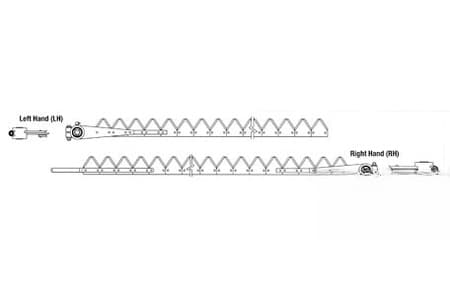
Common parts needed for the Ford New Holland 970 include concaves, rasp bars, belts, chains, bearings, auger fingers, and sickle sections for the header.